The somatotropic axis has become one of the most extensively mapped signalling systems in endocrine research, and much of that mapping has been driven by synthetic peptides that engage it at two distinct receptor targets. Two peptide families dominate the growth-hormone (GH) secretagogue literature: GHRH analogs, which mimic the hypothalamic peptide that natively stimulates pituitary somatotrophs, and ghrelin-receptor agonists (also called GH secretagogues or GHRPs), which act through an entirely separate receptor. This guide surveys what each class is at the molecular level, how the two pathways are studied, and why researchers frequently combine representatives of both in experimental blends.
Two receptors, one axis
Pituitary GH release is governed by more than one upstream signal. GHRH (growth-hormone-releasing hormone) binds the GHRH receptor (GHRHR), a class B G-protein-coupled receptor coupled predominantly to the Gs/adenylate-cyclase/cAMP cascade. Separately, the endogenous peptide ghrelin binds the growth-hormone secretagogue receptor (GHS-R1a), a class A GPCR that signals largely through Gq and phospholipase-C, mobilising intracellular calcium. Because these are two independent receptor systems converging on the same somatotroph population, the peptide tools that target them are studied as complementary probes of a single, layered control circuit.
Class 1 — GHRH analogs
GHRH analogs are engineered variants of the native releasing hormone, typically shortened or amino-acid-substituted to alter enzymatic stability and receptor kinetics. The class studied in the peptide literature includes:
- Sermorelin — a truncated GHRH(1–29) fragment representing the minimal sequence retaining GHRHR agonist activity, historically a reference compound in secretagogue research.
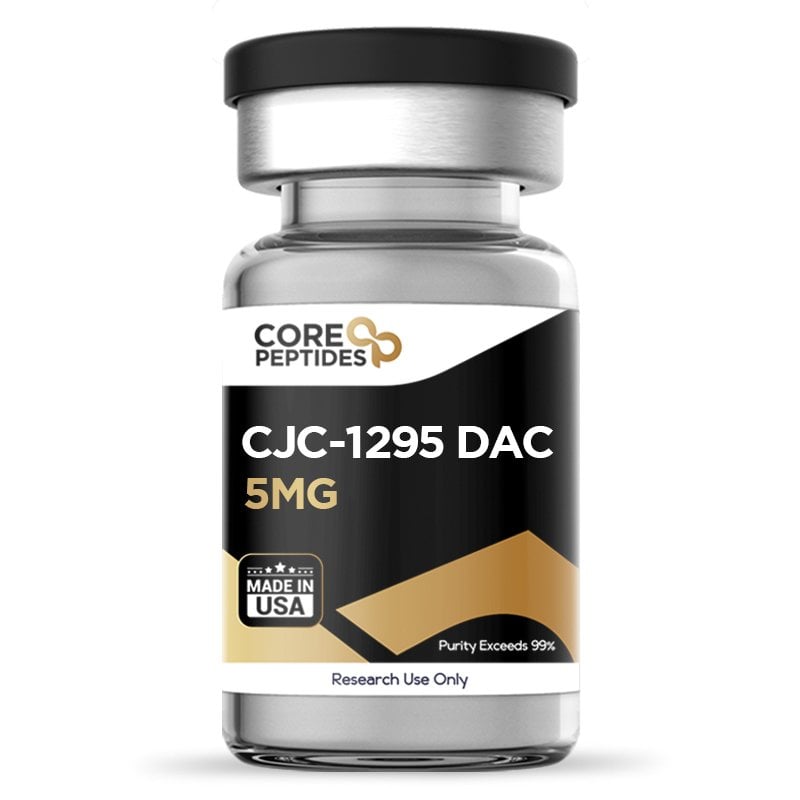
- CJC-1295 — a GHRH(1–29) analog carrying stabilising substitutions; variants with a drug-affinity-complex (DAC) modification have been characterised for markedly extended plasma persistence in preclinical models.
- Tesamorelin — a GHRH analog bearing an N-terminal modification, widely referenced in the analytical and receptor-pharmacology literature.
Mechanistically, these compounds are studied as GHRHR agonists that raise intracellular cAMP and promote GH transcription and pulsatile release in cell and animal models. Because they act on the native releasing-hormone receptor, their signalling is generally described as physiologically patterned rather than purely additive.
Class 2 — ghrelin mimetics / GH secretagogues
The second family activates GHS-R1a and is chemically unrelated to GHRH. It comprises small synthetic peptides investigated as ghrelin mimetics:
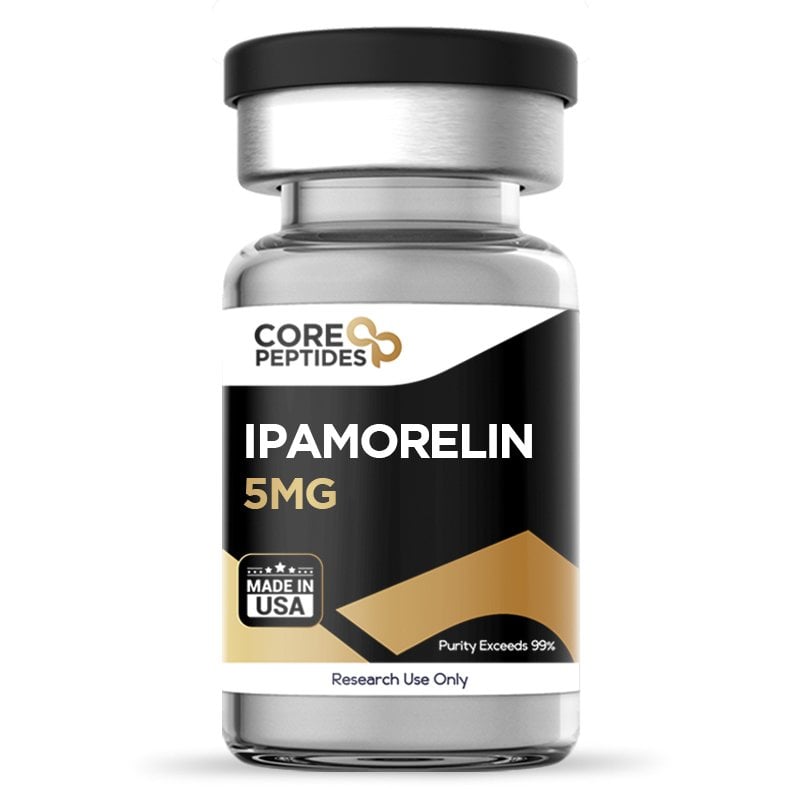
- Ipamorelin — a pentapeptide frequently characterised in the literature for its selectivity at GHS-R1a relative to other GHRPs.
- GHRP-2 and GHRP-6 — early growth-hormone-releasing peptides that remain standard reference agonists in GHS-R pharmacology studies.
- Hexarelin — a hexapeptide GHS-R agonist that has additionally drawn research interest for its reported interactions with the CD36 scavenger receptor in cardiovascular tissue models.
These peptides are studied for their action through the Gq/PLC/calcium arm of somatotroph signalling. Researchers examining Ipamorelin and GHRP-2 in vitro typically compare receptor affinity, signalling selectivity, and cross-reactivity across the GHRP series to distinguish GHS-R-specific effects from off-target activity.
Why the two classes are combined in research blends
The central rationale for co-studying the two families is receptor-pathway complementarity. Because GHRH analogs and ghrelin mimetics engage separate receptors and separate second-messenger systems on the same cell, in vitro and animal studies have repeatedly examined whether their combined stimulation produces effects distinct from either alone — a synergy hypothesis rooted in the distinct Gs-cAMP versus Gq-calcium signalling arms.
Studying a GHRH analog alongside a ghrelin mimetic lets researchers interrogate two convergent signalling arms of the same somatotroph population within a single experimental system.
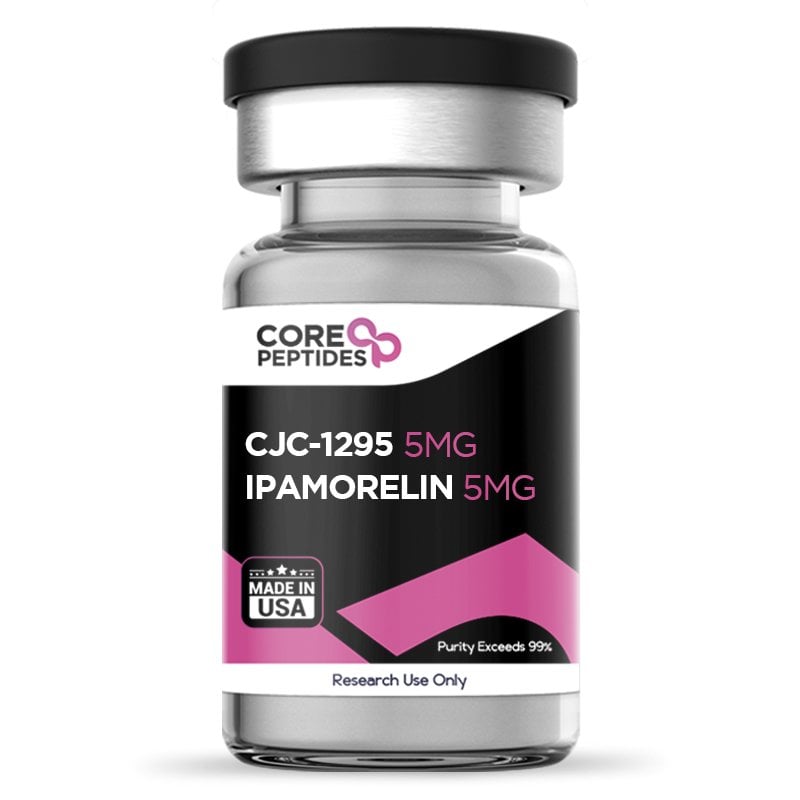
This is the logic behind fixed-ratio research preparations such as the CJC-1295 & Ipamorelin Blend (10mg), which pairs one representative from each class. In an experimental setting, such a blend lets a laboratory hold the two-receptor stimulus constant across replicates while varying other conditions. For deeper single-compound background, see the CJC-1295 research guide and the Ipamorelin research guide.
How the pathways are characterised in the laboratory
Across both classes, the analytical toolkit is broadly similar. Common approaches described in the literature include:
- Receptor-binding and functional assays — competitive binding at GHRHR or GHS-R1a, and cell-based reporter systems reading out cAMP (GHRH analogs) or intracellular calcium flux (ghrelin mimetics).
- Selectivity profiling — screening a candidate against related receptors to quantify on-target versus off-target engagement, a recurring theme in comparisons of Ipamorelin against the GHRP series.
- Analytical characterisation — identity and purity assessment by HPLC and mass spectrometry, and stability studies examining susceptibility to peptidase cleavage.
- Model systems — cultured pituitary cells and animal models used to observe GH-release dynamics and pulsatility under single-agonist versus dual-agonist conditions.
Comparing the two classes at a glance
| Feature | GHRH analogs | Ghrelin mimetics / GHS peptides |
|---|---|---|
| Target receptor | GHRHR (class B GPCR) | GHS-R1a (class A GPCR) |
| Primary signalling arm | Gs → cAMP | Gq → PLC → Ca2+ |
| Endogenous ligand modelled | GHRH | Ghrelin |
| Representative peptides | Sermorelin, CJC-1295, Tesamorelin | Ipamorelin, GHRP-2, GHRP-6, Hexarelin |
Summary
GHRH analogs and ghrelin mimetics are best understood as two non-overlapping molecular keys to the same somatotroph lock. The GHRH class reconstructs the native releasing-hormone signal through the cAMP pathway; the ghrelin-mimetic class recruits the parallel calcium pathway through GHS-R1a. Their independence at the receptor level is precisely what makes them informative to study side by side, and what motivates the dual-agonist blends that appear throughout the research-peptide literature.
All compounds and materials discussed here are intended strictly for laboratory and in-vitro research use only. Nothing in this article describes or endorses use in humans or animals, and none of it constitutes medical, therapeutic, or dosing guidance. These peptides are not drugs, supplements, or foods, and are not for human or veterinary consumption.