Ipamorelin is a synthetic pentapeptide that has attracted sustained interest across preclinical endocrinology research as one of the more selective members of the growth hormone secretagogue (GHS) family. First characterized in the mid-1990s, it belongs to a class of small peptides designed to interact with the ghrelin receptor and stimulate the release of growth hormone from the pituitary in laboratory models. Its comparatively clean pharmacological profile — a recurring theme in the published literature — has made it a frequent reference compound in in vitro and animal studies of the somatotropic axis. This overview surveys what Ipamorelin is, its molecular identity, and the research areas the scientific literature has explored, strictly within a laboratory context.
Molecular Identity and Characterization
Ipamorelin is a short pentapeptide, meaning it is composed of five amino acid residues. It is registered under CAS number 170851-70-4 and carries the molecular formula C38H49N9O5. Its sequence incorporates non-standard residues, a structural feature that distinguishes it from earlier growth hormone-releasing peptides and contributes to the selectivity that researchers frequently cite.
In analytical settings, Ipamorelin is commonly characterized using techniques standard to peptide science, including high-performance liquid chromatography (HPLC) for purity assessment and mass spectrometry for molecular-weight confirmation. As a lyophilized research material, it is handled according to conventional laboratory practices for small peptides, with attention to reconstitution solvents, storage temperature, and stability under repeated handling — all parameters that peptide chemists routinely document.
| Property | Value |
|---|---|
| Compound class | Pentapeptide, growth hormone secretagogue |
| CAS number | 170851-70-4 |
| Molecular formula | C38H49N9O5 |
| Primary research target | Ghrelin receptor (GHS-R1a) |
Mechanism Studied in Preclinical Models
The literature describes Ipamorelin as a ghrelin-receptor agonist that acts on the growth hormone secretagogue receptor (GHS-R1a). In preclinical research, engagement of this receptor pathway has been associated with the pulsatile release of growth hormone from pituitary somatotrophs. Because Ipamorelin mimics aspects of the endogenous ligand ghrelin at this receptor, it has served as a useful molecular tool for researchers investigating the signaling cascades that govern growth hormone secretion.
Studies in this area typically examine receptor binding, downstream intracellular signaling, and the dynamics of hormone release in cell-culture systems and animal models. The compound is often positioned in the same research conversation as growth hormone-releasing hormone (GHRH) analogs, since the two act through distinct but complementary receptor systems within the hypothalamic-pituitary axis.
The Selectivity Profile in the Literature
What most distinguishes Ipamorelin in published research is its reported selectivity. Earlier growth hormone-releasing peptides were noted in the literature for stimulating the release of additional pituitary hormones, such as cortisol and prolactin, alongside growth hormone. Ipamorelin has been characterized in preclinical work as a more selective secretagogue, with investigators describing a comparatively focused effect on the growth hormone axis in the model systems studied.
The selectivity profile discussed across the preclinical literature is the principal reason Ipamorelin is treated as a reference secretagogue in mechanistic studies of the ghrelin-receptor pathway.
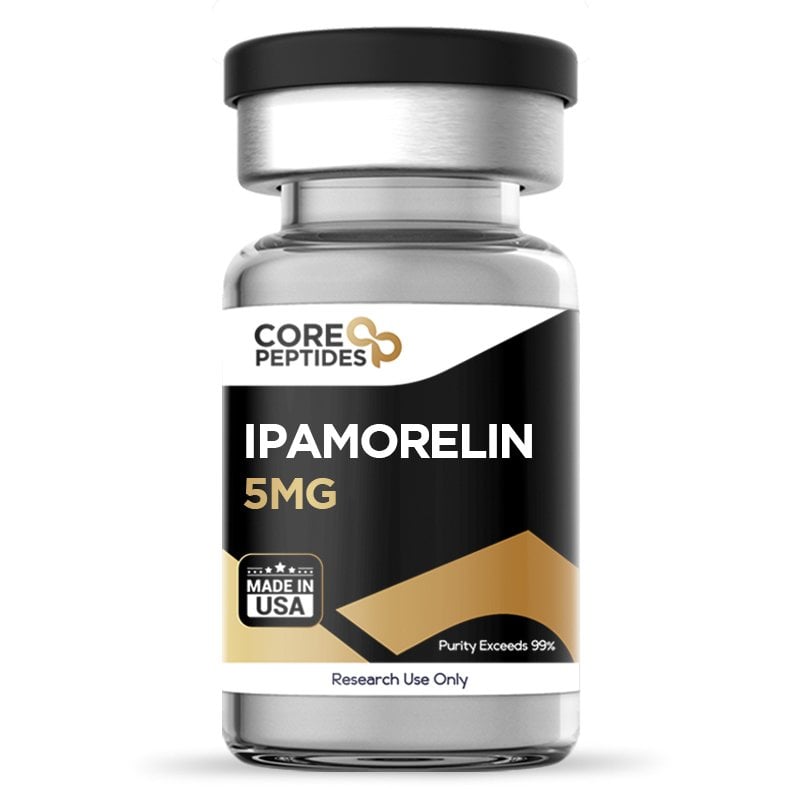
This selectivity is precisely why researchers value the compound as an experimental probe: it allows them to interrogate the ghrelin-receptor pathway with fewer confounding endocrine variables. For laboratories comparing multiple secretagogues, Ipamorelin — available for research as Ipamorelin (5mg) — frequently functions as the selective benchmark against which broader-acting peptides are measured.
Why Ipamorelin Is Paired with CJC-1295 in Research Blends
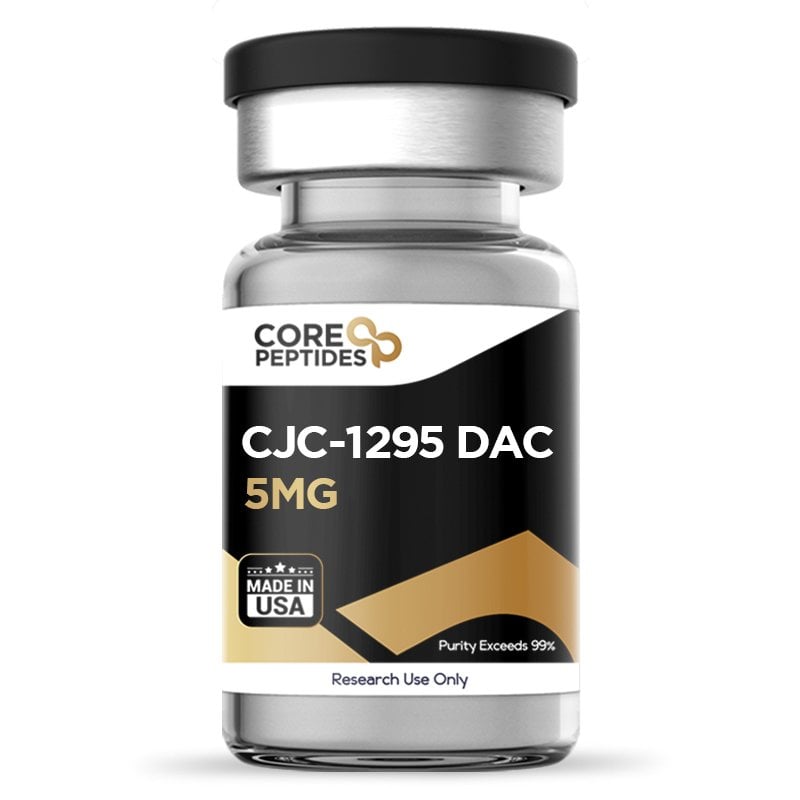
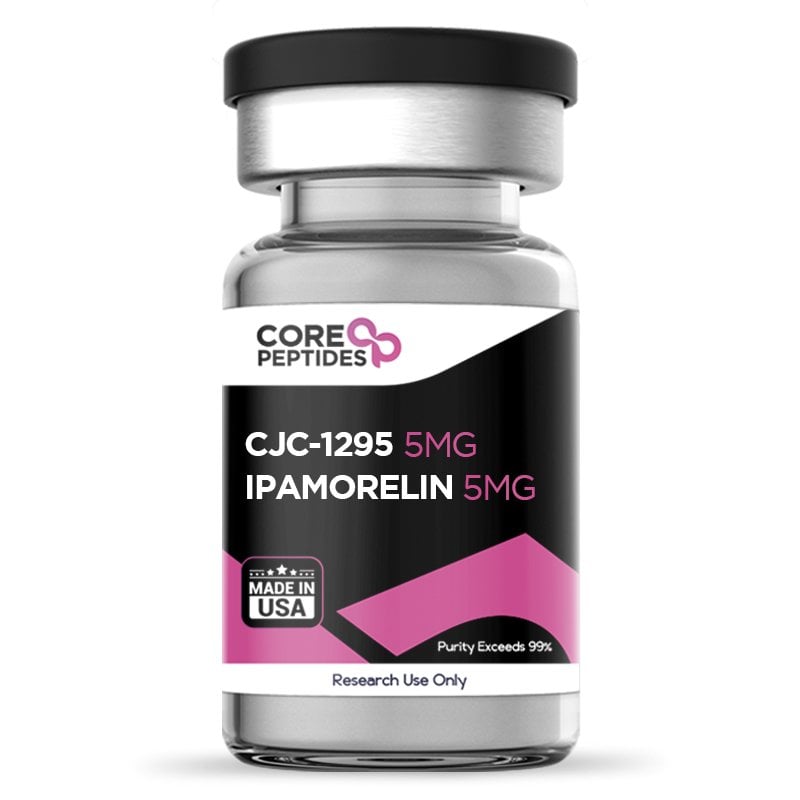
Ipamorelin appears frequently alongside CJC-1295 in research-oriented peptide blends, and the rationale is rooted in the two compounds' distinct mechanisms. CJC-1295 is a growth hormone-releasing hormone (GHRH) analog that acts on the GHRH receptor, whereas Ipamorelin acts on the ghrelin receptor. Because these are separate receptor systems that both feed into growth hormone regulation, researchers studying the somatotropic axis often examine them together to explore how the two pathways interact.
This complementary-pathway design is the conceptual basis for research combinations such as the CJC-1295 & Ipamorelin Blend (10mg). Investigators interested in the pharmacology of GHRH analogs can find further background in our CJC-1295 research guide, while the broader mechanistic landscape is surveyed in our overview of growth hormone secretagogues.
Research Applications and Areas of Investigation
Within the preclinical literature, Ipamorelin has been used to explore several broad questions in endocrinology and receptor biology. Researchers have investigated it in the following general contexts:
- Receptor pharmacology — as a tool to characterize GHS-R1a binding, agonism, and signaling in cell-based assays.
- Comparative secretagogue studies — as a selective reference point when profiling the endocrine effects of other growth hormone-releasing peptides in animal models.
- Somatotropic axis modeling — as part of experimental designs that dissect the interplay between ghrelin-receptor and GHRH-receptor pathways.
- Peptide stability and analytical method development — as a well-defined pentapeptide for validating chromatographic and mass-spectrometric workflows.
These represent research directions the literature has explored in a laboratory setting; they are not claims about outcomes in humans or animals outside of controlled scientific investigation.
Handling and Analytical Considerations
As with other research peptides, Ipamorelin's utility in the laboratory depends on careful characterization and handling. Purity, correctly confirmed molecular mass, and documented storage history all bear on the reproducibility of experimental data. Laboratories typically confirm identity against the expected formula (C38H49N9O5) and CAS designation (170851-70-4) before incorporating the material into an experimental protocol, and they follow established peptide-handling procedures to preserve integrity throughout a study.
Research-use-only notice: Ipamorelin is offered strictly for laboratory and in-vitro research use only. It is not a drug, dietary supplement, cosmetic, or food, and it is not intended for human or veterinary use, diagnosis, treatment, or the prevention of any condition. Nothing in this overview should be interpreted as medical guidance or as a recommendation for use in humans or animals. All handling should be performed by qualified personnel in an appropriately equipped research environment.