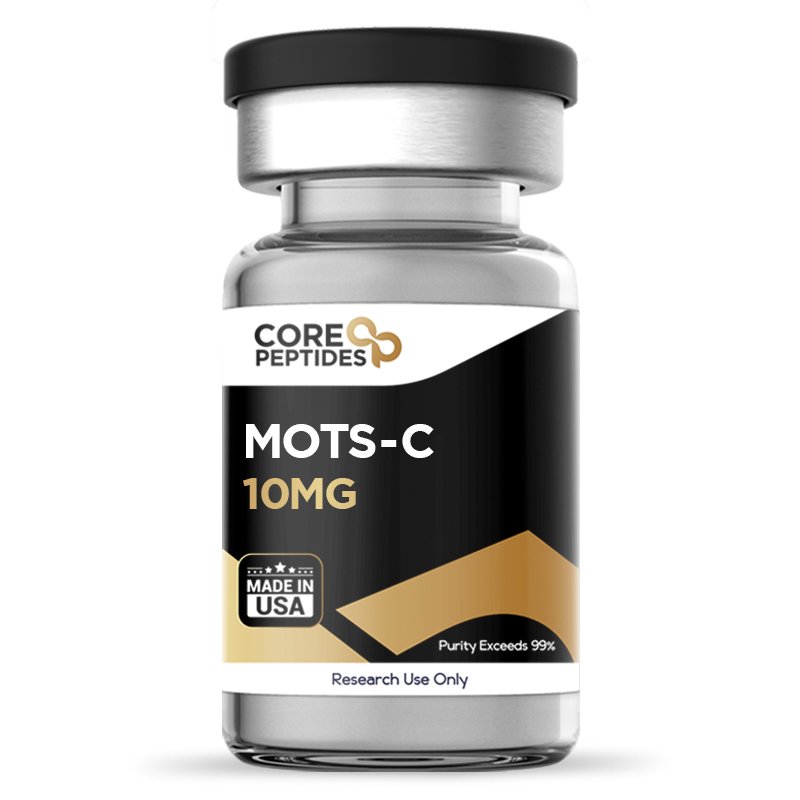
MOTS-c (mitochondrial open reading frame of the twelve S rRNA type-c) is a mitochondrial-derived peptide (MDP) that has attracted sustained interest across metabolic and cell-signalling research. Unlike most peptides studied in the laboratory, MOTS-c is not encoded in the nuclear genome; it is instead read from a small open reading frame within the mitochondrial 12S ribosomal RNA gene. This unusual origin has made the peptide a focal point for researchers examining how mitochondria may communicate with the rest of the cell, and it is offered strictly as a reference material for in-vitro and preclinical investigation.
Molecular Identity and Origin
MOTS-c is a short peptide comprising 16 amino acid residues. Its defining characteristic is its mitochondrial genomic origin: the sequence is derived from an alternative open reading frame located in the mitochondrial DNA, placing it within the broader class of mitochondrial-derived peptides that also includes humanin and the SHLP family. Because it is transcribed from mitochondrial rather than nuclear DNA, MOTS-c is frequently used in the literature as a model system for studying retrograde signalling — the flow of information from mitochondria back toward the nucleus and cytoplasm.
In analytical characterization, research-grade MOTS-c is typically assessed for purity and sequence identity using techniques such as high-performance liquid chromatography (HPLC) and mass spectrometry. These methods allow laboratories to confirm peptide identity and to distinguish the intact 16-residue sequence from truncated or modified fragments prior to experimental work.
Mitochondrial-Derived Peptides in Context
The discovery of peptides encoded within mitochondrial DNA reframed how researchers think about the organelle. Rather than functioning solely as a site of ATP production, the mitochondrion is now investigated as a source of small signalling molecules. MOTS-c sits alongside other MDPs as an object of study in this field, and much of the preclinical literature positions it as a candidate for understanding how cellular energy status might be encoded and transmitted.
- Genomic source: encoded within the 12S rRNA region of mitochondrial DNA.
- Peptide class: mitochondrial-derived peptide (MDP).
- Research framing: a tool compound for probing mitochondrial-to-nuclear communication.
- Length: a 16-amino-acid sequence, short enough for straightforward synthesis and analytical verification.
The AMPK Signalling Pathway
A substantial share of MOTS-c research centres on AMP-activated protein kinase (AMPK), a cellular energy sensor that becomes active when the ratio of AMP to ATP rises. AMPK is a well-established node in the study of cellular metabolism, and preclinical investigations have examined MOTS-c in relation to this pathway. In these models, researchers have explored how the peptide associates with AMPK activation and with downstream metabolic signalling events.
Studies in cultured cells and animal models have investigated the folate–methionine cycle and related metabolic intermediates as points of interaction, alongside the peptide's reported movement toward the nucleus under conditions of metabolic stress. This nuclear translocation is one of the more distinctive features examined in the literature, since it offers a mechanistic model for how a mitochondrially encoded molecule might influence nuclear gene expression.
MOTS-c is studied primarily as a model for retrograde mitochondrial signalling — a window into how the organelle's genome may participate in regulating cellular metabolism.
Metabolic Research Areas
Because AMPK sits at the heart of energy homeostasis, MOTS-c has been examined in preclinical contexts related to glucose handling, lipid metabolism, and the cellular response to metabolic stress. Researchers investigating MOTS-c (10mg) in vitro have used it to probe questions about how mitochondrial signals intersect with insulin-sensitive pathways in cell and tissue models. It is important to emphasise that these are mechanistic, laboratory-based inquiries; the literature describes molecular associations and pathway activity, not outcomes in humans.
MOTS-c is also frequently studied within the wider field of mitochondrial biology and cellular ageing research, where scientists examine how peptide expression and metabolic signalling shift under different experimental conditions. For readers exploring adjacent areas of cellular energetics, our NAD+ research guide covers a related axis of metabolic and mitochondrial investigation.
Common Experimental Models
- Cell culture: examining AMPK activation and metabolic markers in cultured cell lines.
- Rodent models: investigating systemic metabolic signalling in preclinical animal studies.
- Biochemical assays: characterising peptide interactions with metabolic enzymes and pathways.
Analytical and Handling Considerations
As with other research peptides, laboratories working with MOTS-c prioritise verified identity, purity, and appropriate storage to preserve integrity across experiments. Reconstitution, aliquoting, and storage decisions are made according to the laboratory's own validated procedures and the requirements of each assay. Confirming lot-specific analytical data — such as chromatographic purity and mass-spectrometric identity — is a standard first step before a peptide enters an experimental workflow. Researchers new to this material class may find our overview of what research peptides are a useful orientation.
Summary
MOTS-c is a 16-amino-acid mitochondrial-derived peptide notable for being encoded within mitochondrial DNA. The preclinical literature has explored its relationship to AMPK signalling, its reported nuclear translocation under metabolic stress, and its role as a model for retrograde mitochondrial-to-nuclear communication. These research areas are described here at the level of molecular mechanism and experimental interest, without any claim of results in living human systems.
Core Peptides supplies MOTS-c strictly for laboratory and in-vitro research use only. This material is not a drug, supplement, or food, and it is not intended for human or veterinary use, diagnosis, treatment, or the prevention of any condition. All information above is provided for educational and scientific reference purposes only.