GHRP-2, GHRP-6 and Hexarelin belong to a family of synthetic peptides known collectively as growth hormone-releasing peptides (GHRPs) — small, chemically defined molecules that have served as important pharmacological tools in neuroendocrine research for several decades. Distinct from the growth-hormone-releasing hormone (GHRH) analogs, these compounds share a common molecular target: the growth hormone secretagogue receptor (GHS-R1a), the same receptor that recognizes the endogenous peptide hormone ghrelin. This shared pathway, combined with subtle structural differences between the three peptides, has made them a recurring subject of comparative in vitro and preclinical investigation. This overview summarizes their molecular identities, the receptor biology described in the literature, and the ways researchers have contrasted them experimentally.
Molecular identities and classification
All three compounds are short synthetic peptides classified as growth hormone secretagogues (GHS). Each carries a distinct CAS registry identity used for analytical characterization and sourcing in a laboratory setting:
| Peptide | CAS number | Class |
|---|---|---|
| GHRP-2 (pralmorelin) | 158861-67-7 | Synthetic GHS peptide |
| GHRP-6 | 87616-84-0 | Synthetic GHS peptide |
| Hexarelin | 140703-51-1 | Synthetic GHS hexapeptide |
GHRP-6 was among the earliest members of this class to be characterized and is often described in the literature as the prototypical growth hormone-releasing peptide. GHRP-2 and Hexarelin were subsequently developed as structurally related analogs. Hexarelin, as its name implies, is a hexapeptide, and the GHRP designation reflects the historical numbering of compounds within this synthetic series rather than any biological ranking.
The ghrelin receptor (GHS-R1a) pathway
The defining feature these peptides share is agonism at the growth hormone secretagogue receptor type 1a (GHS-R1a), a G-protein-coupled receptor. Research established this receptor as the molecular target of the GHRP class before the endogenous ligand ghrelin was identified; the discovery that ghrelin binds the same receptor unified an entire field of neuroendocrine study. In preclinical models, GHS-R1a is described as being expressed in the anterior pituitary and in hypothalamic regions, positioning it at the interface of several regulatory circuits.
At the molecular level, receptor activation by these peptides has been studied in the context of Gq/11-coupled signaling, phospholipase C activity and intracellular calcium mobilization. Because GHS-R1a is the receptor for ghrelin, in vitro studies frequently examine these synthetic peptides as pharmacological probes for interrogating ghrelinergic signaling more broadly. For readers seeking a wider framing of this receptor class, our companion guide on growth hormone secretagogues outlines how GHS-R1a agonists are categorized in the research literature.
The convergence of GHRP-2, GHRP-6 and Hexarelin on a single receptor — GHS-R1a — is what makes them so useful as comparative tools: differences observed in the laboratory can often be traced to how each peptide engages the same molecular target.
Differences discussed in the literature
Although the three peptides act through the common GHS-R1a pathway, the research literature repeatedly emphasizes that they are not interchangeable. Comparative studies have examined several axes of difference:
- Receptor engagement profile. Investigators have characterized differences in how strongly each peptide activates GHS-R1a signaling in cell-based assays, using these contrasts to probe structure-activity relationships across the series.
- Cross-reactivity with other pathways. The literature notes that, beyond the growth-hormone axis, these secretagogues have been examined in relation to other neuroendocrine signals studied in animal models, and that the peptides differ in the breadth of pathways they appear to touch.
- Structural determinants. Because GHRP-6, GHRP-2 and Hexarelin differ in amino-acid composition, researchers use the set to map which structural features correlate with which signaling outcomes at the receptor.
Hexarelin in particular has attracted attention in the literature as a distinct probe within the group, and it is frequently placed alongside GHRP-2 and GHRP-6 in comparative characterization studies of the GHS class.
Research history and analytical context
The GHRP series occupies a notable place in the history of neuroendocrine pharmacology. GHRP-6 helped establish that a small synthetic peptide could act at a then-unidentified receptor, and the search for that receptor's natural ligand ultimately contributed to the identification of ghrelin. This lineage means the peptides are often referenced not only as experimental compounds in their own right but as historically significant tools that shaped an entire area of study.
In the modern laboratory, these peptides are handled as defined reference materials. Analytical work typically involves confirming identity and purity through methods such as high-performance liquid chromatography (HPLC) and mass spectrometry, with the CAS identities above serving as the anchor for procurement and record-keeping. Researchers comparing multiple secretagogues within a single experimental design will often source them as a matched set to control for supplier and lot variation.
Related synthetic secretagogues
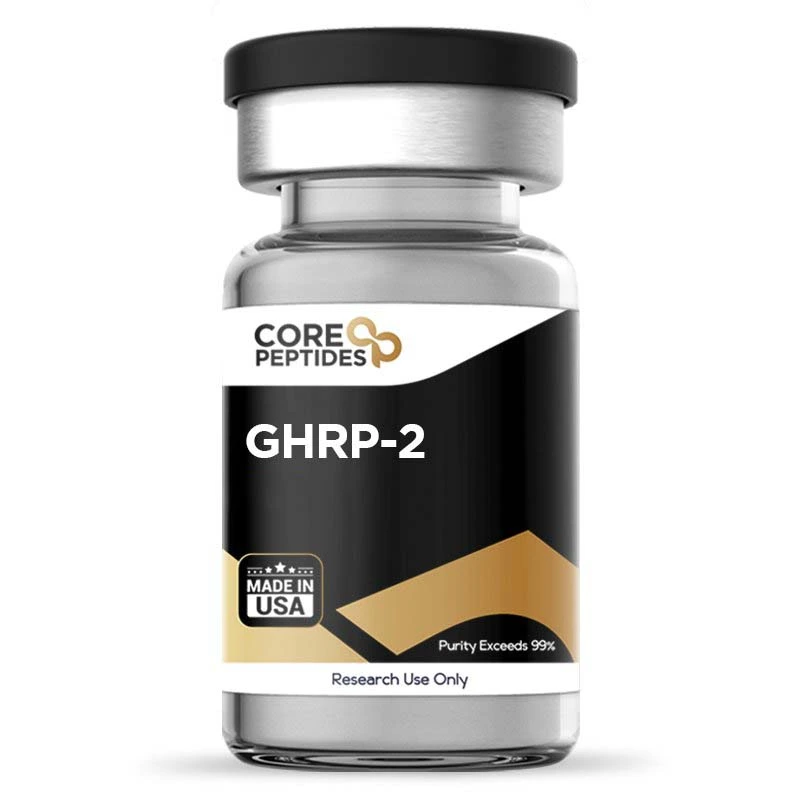
The GHRP peptides are frequently studied alongside other GHS-R1a-active compounds. Ipamorelin, for example, is another synthetic secretagogue often included in comparative work; our Ipamorelin research guide covers that compound's profile in more depth. Within the classic GHRP group, laboratories exploring this receptor family commonly reference materials such as GHRP-2 (5mg / 10mg), GHRP-6 (5mg / 10mg) and Hexarelin (5mg) when assembling a comparative panel of GHS-R1a agonists for in vitro characterization.
Research use only. The information above is provided solely for educational and scientific reference. GHRP-2, GHRP-6 and Hexarelin are supplied strictly for laboratory and in-vitro research use only. They are not drugs, dietary supplements, cosmetics or foods, and are not intended for human or veterinary use, diagnostic application, or any form of administration to humans or animals. Nothing in this article should be interpreted as medical, therapeutic or dosing guidance.