A Certificate of Analysis, or COA, is the single most important document that accompanies a research peptide. It is the analytical record that links a physical vial on your bench to the laboratory data describing what is inside it. For any in-vitro or preclinical program, the COA is what turns an unlabelled powder into a characterised research material with a documented identity and purity. Yet many researchers glance only at the headline purity figure and move on. A COA is a structured document, and learning to read every section is a foundational laboratory skill that protects the reproducibility of your work. This guide walks through each part of a typical peptide COA, explains how to match a certificate to a received vial, and covers why independent, third-party testing matters for reproducible science.
What a Certificate of Analysis is for
A COA is a summary of the analytical characterisation performed on a specific manufactured batch of a compound. It exists to answer two scientific questions: Is this the correct molecule? (identity) and How pure is it? (purity). Everything else on the document supports the traceability of those two answers. Because peptide synthesis produces not only the target sequence but also deletion sequences, truncated fragments, and residual reagents, a compound can never be assumed to be pure or correctly identified on the strength of a label alone. The COA is the evidence that laboratory testing was actually performed, and it is the reference you cite when documenting the provenance of a material in your own records.
The core sections of a peptide COA
Certificates vary in layout between laboratories, but a well-constructed peptide COA contains a consistent set of fields. Each one plays a distinct role in traceability and characterisation.
Product identity
At the top you will find the compound name, and often a sequence, molecular formula, and molecular weight. This section states which molecule the certificate is characterising. Where a CAS number or theoretical molecular weight is listed, it should correspond to the published identity of that peptide. The identity block is what you cross-check against your order and against the reference data in your own literature review before any experimental work begins.
Batch or lot number
The batch (or lot) number is the anchor of the entire document. A single synthesis run produces one batch, and the analytical data on the COA describes that batch and no other. Two vials of the same compound purchased at different times may carry different batch numbers and, therefore, different certificates. Recording the batch number in your laboratory notebook is what makes an experiment traceable back to a specific, characterised lot of material.
Test date and manufacture date
The date of analysis tells you when the characterisation was performed. This matters because peptide purity can change over time depending on handling and storage conditions, so a COA is a snapshot of the material at the point of testing. Reading the test date alongside your own receipt and storage records helps you reason about the age of a batch. For context on how time and conditions affect a compound, see our guide on peptide storage and stability.
HPLC purity result
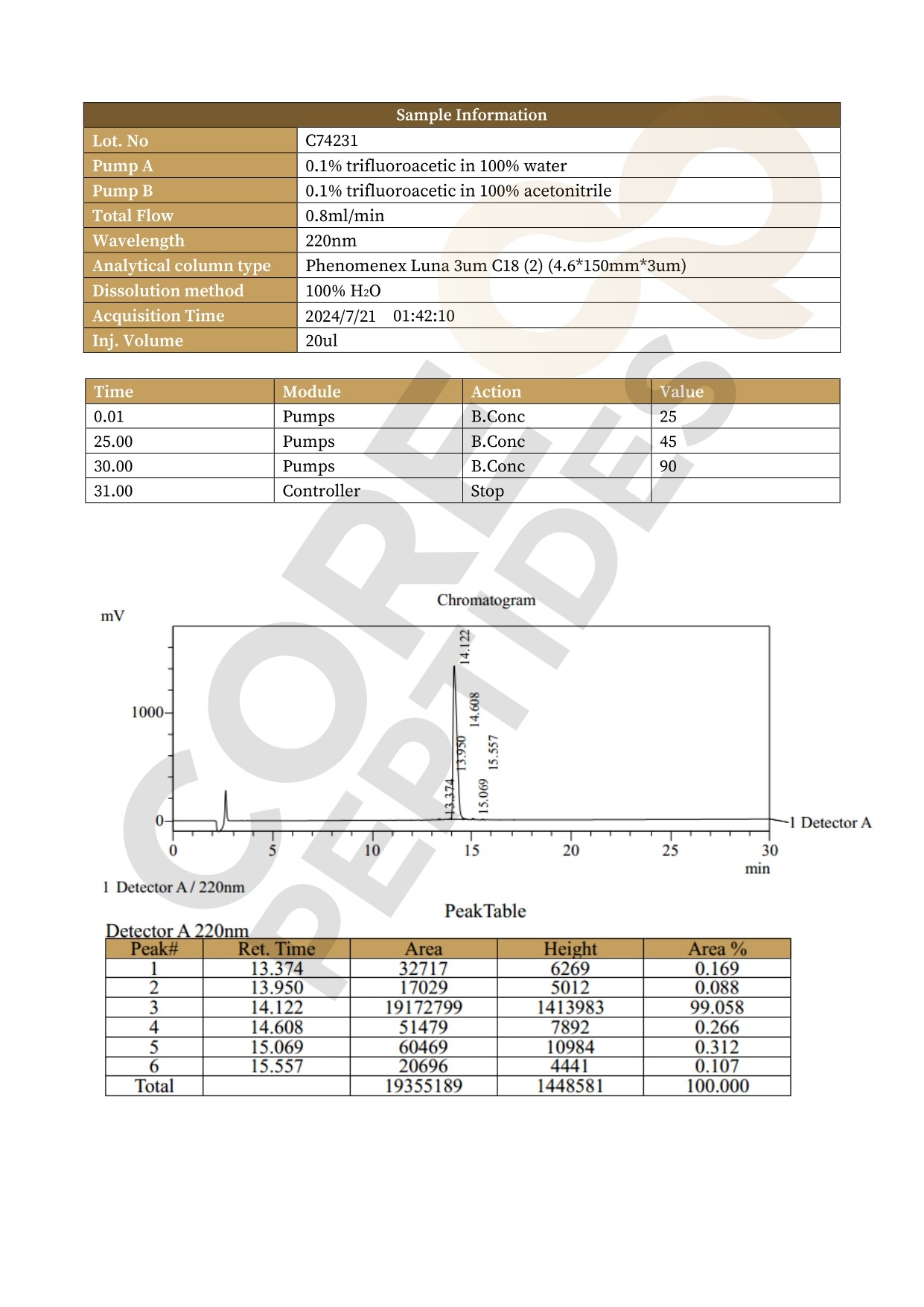
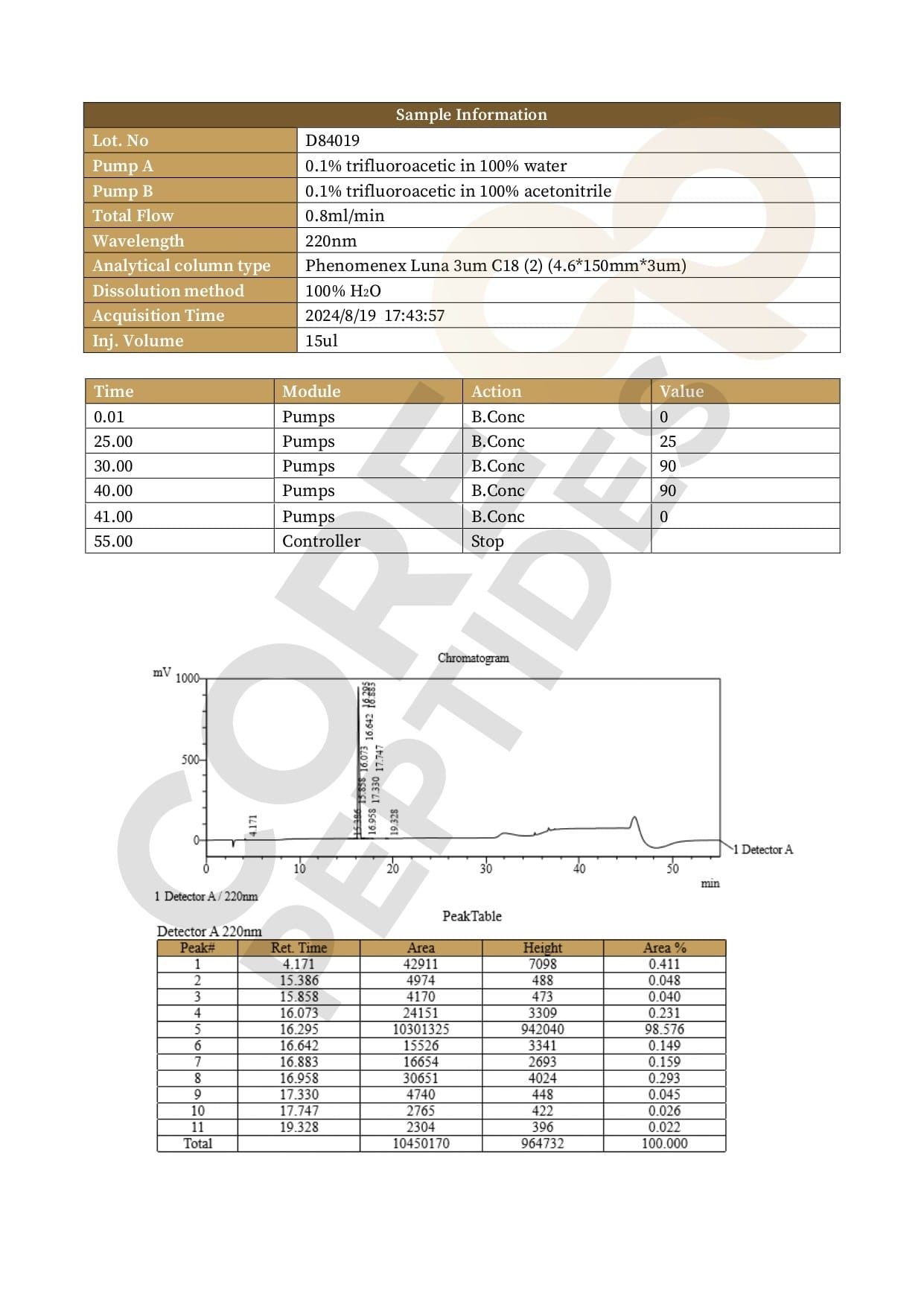
High-performance liquid chromatography (HPLC), typically with UV detection, is the standard method for quantifying chromatographic purity. The COA reports a purity value — commonly expressed as a percentage of the total integrated peak area — and is frequently accompanied by the chromatogram itself. The chromatogram is worth examining directly: a clean profile shows a dominant target peak with minimal neighbouring impurity peaks. A stated figure such as a ≥99% target purity is only as meaningful as the trace behind it, so where the chromatogram is provided, read it rather than trusting the number in isolation.
Mass-spectrometry identity confirmation
Mass spectrometry (often reported as LC-MS or MALDI) confirms identity by measuring the molecular mass of the compound. The observed mass on the COA should match the theoretical mass of the intended sequence within the instrument's expected tolerance. HPLC tells you how much of the material is a single species; mass spec tells you that the species is the molecule you intended to characterise. The two techniques are complementary, and a robust COA presents both — purity and identity are different questions, and each requires its own method.
Appearance
The appearance field describes the physical form of the material, for example a white to off-white lyophilised powder. It is a simple but useful check: the description on the certificate should match what you observe in the vial. A visual discrepancy is an early signal worth investigating before the material enters an experiment.
The issuing laboratory
Finally, the COA identifies the laboratory that performed the analysis, and it should be signed or otherwise attributed. The identity of the issuing lab is central to interpreting the document — a certificate from a named, independent analytical facility carries different evidential weight than an unattributed sheet.
A Certificate of Analysis is not a marketing claim. It is a dated, batch-specific analytical record — and it is only as trustworthy as the laboratory that stands behind it.
Matching a COA batch to a received vial
The verification step that researchers most often skip is the simplest: confirming that the certificate in hand actually describes the vial in hand. Because each COA is batch-specific, the match must be exact.
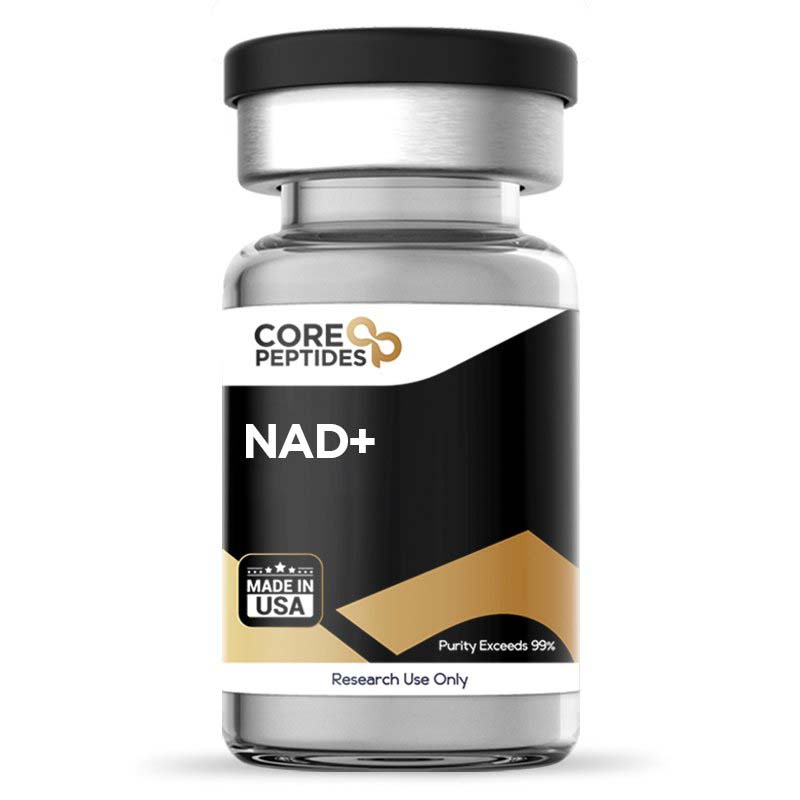
- Compare the batch or lot number printed on the vial label against the batch number on the COA. They must be identical — not merely the same compound, but the same lot.
- Confirm the compound identity — name and, where present, sequence and molecular weight — agrees between label, certificate, and your order.
- Check the appearance described on the COA against the physical contents of the vial.
- Record the batch number and test date in your experimental notes so the material is traceable in any future write-up or reproduction attempt.
If a vial carries no batch number, or the number does not match any certificate you were provided, the material is effectively uncharacterised for your purposes. Request the correct batch-specific COA before proceeding.
Why third-party and independent testing matters
A COA produced solely in-house by the manufacturer describes the material but carries an inherent conflict: the party making the claim is also the party being assessed. Third-party or independent testing — analysis performed by a laboratory separate from the manufacturer — provides an external check on identity and purity. For research reproducibility this is significant. When a study can be traced to a specific batch that was independently characterised, another laboratory has a far better chance of sourcing and verifying comparable material and reproducing the result. Independent characterisation reduces the risk that an experimental outcome is an artefact of an impurity or a misidentified compound rather than the biology under study. For a deeper look at the analytical methods themselves, see our guide on how peptide purity is verified.
Building COA checks into your workflow
Reading a COA well is a habit, not a one-off task. Treat the certificate as a required input to every experiment: obtain the batch-specific COA, confirm identity and purity against the intended molecule, match the batch number to the vial, note the test date, and archive the document alongside your experimental records. Consistent COA discipline is one of the least expensive and most effective ways to protect the integrity and reproducibility of a research program.
All Core Peptides compounds and the associated documentation are supplied strictly for laboratory and in-vitro research use only. Nothing in this guide is intended for human or veterinary use, and it does not constitute medical, diagnostic, or therapeutic advice. Materials described here are not drugs, foods, or cosmetics and must be handled only by qualified researchers in an appropriate laboratory setting.